
Valentines roses are the most predictable transaction in floristry and the one most people feel faintly ripped off by. That feeling is understandable and the reasons behind it are worth knowing, because they point directly at how to buy better.
This is the workroom explanation: why the price triples, what you are actually getting, which varieties survive a Sydney February, and what to do instead if you want the same effect for less.
Why the Price Actually Triples
It is not florist opportunism. It is global supply and demand meeting a fixed date.
Red roses have one enormous demand spike per year. Worldwide. On the same day. Growers plant and time crops specifically for it, and the wholesale price for red roses in the two weeks before 14 February commonly runs two to four times the January price. That is the cost at the market, before a florist has touched it.
February is the wrong season in Australia. Roses grow best in cooler conditions. Mid-February in Sydney is peak heat and humidity, which is close to the worst possible time for local rose production. Much of the Valentine’s supply is imported or grown under protection, both of which cost more.
Long-stemmed premium reds are the specific bottleneck. The classic 60-70cm red rose is the most contested product in the world that week. Shorter stems, spray roses and other colours are far less affected.
Labour and delivery capacity spike. Every florist in Sydney is running extra staff and extra vans on one day, with a delivery window that cannot move.
So the honest position: if you want a dozen long-stemmed red Valentines Roses delivered on 14 February in Sydney, expect to pay a genuine premium. It is not a markup on nothing.
What You Should Expect to Pay
Rough Sydney guidance for 2026, buying direct from a workroom:
- Six long-stemmed red roses, wrapped – $90-140
- A dozen long-stemmed red roses, wrapped – $160-260
- A dozen in a vase – $200-320
- Two dozen – $300-500
- Fifty stems – $600-1,000
- A single rose, well presented – $25-45
If a price looks dramatically lower than this, check what the stem length actually is. Short-stemmed roses at 40cm are a different product to 60cm+ premium stems, and the photo will not tell you.
Order Early. Genuinely Early.
The most useful practical advice on this page.
Order at least a week ahead, ideally two. Florists buy for Valentine’s Day against confirmed orders. Order early and your roses are bought specifically, conditioned properly and reserved. Order on 13 February and you are getting whatever is left, at whatever it costs, with no delivery window guarantee.
Delivery windows on 14 February are wide. Any florist promising a narrow window on the busiest delivery day of the year is overpromising. Expect a half-day window and plan around it. If you need a specific time – a restaurant, an office before 3pm – say so at the time of ordering, not on the day.
Consider 13 or 15 February. Delivery is easier, the recipient gets flowers when nobody else does, and if you order for the 15th some florists price it closer to normal. Sending on the day before also means they have the flowers for the actual evening.
Which Roses Actually Last
Not all reds are the same, and the variety matters more than the count.
- Freedom – the workhorse premium red. Large head, strong stem, excellent vase life. The standard for a reason.
- Explorer and Red Naomi – large-headed, dramatic, hold well.
- Rhodos and Grand Prix – classic reds, reliable.
- Garden roses in deep burgundy – fewer stems needed, richer, more expensive per stem, and often the better-looking choice.
Ask two questions: what variety, and what stem length. A florist who can answer both immediately is selling you real roses. Vagueness on variety is a signal.
Guard petals are the slightly bruised outer petals left on deliberately to protect the bloom in transit. They are a sign of proper handling, not damage. Peel them off when the roses arrive.
The Alternatives That Look Better for Less
This is where the real value sits, and a florist will usually agree with you.
Deep burgundy garden roses. Richer, more textural and more grown-up than standard reds. Fewer stems needed for the same impact.
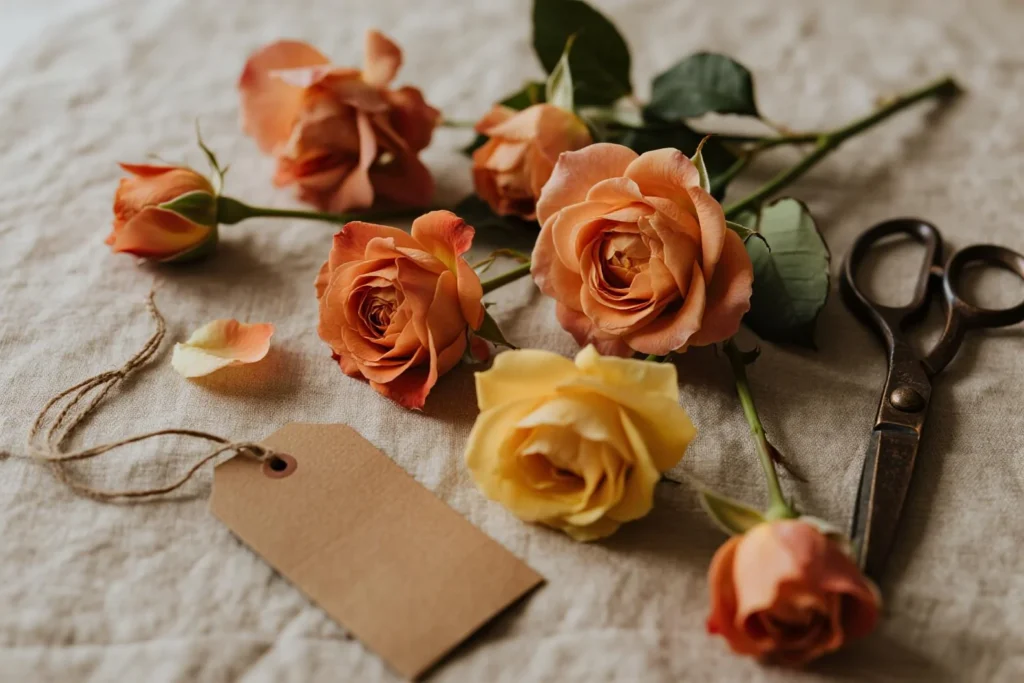
A different colour entirely. Cream, blush, dusty pink, coral and peach roses are not caught in the red price spike and often cost 30-40% less for the same quality and stem length. They also look considerably more sophisticated.
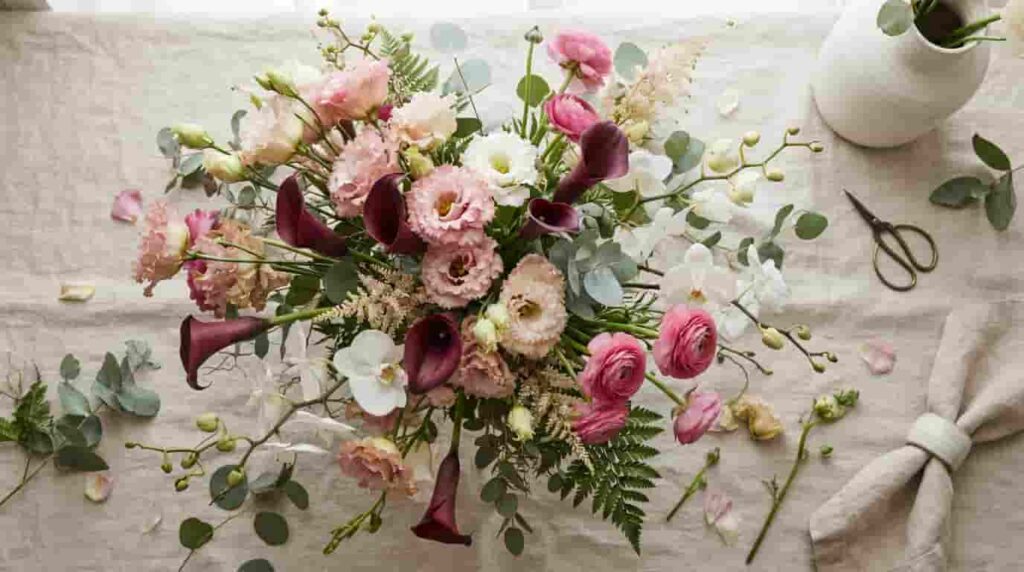
Mixed seasonal romantic. A generous arrangement of lisianthus, ranunculus, garden roses, sweet pea and stock in blush tones costs less than a dozen premium reds and looks like more thought went into it. Which it did.
Peony. Not available in February in Australia – it is a spring flower – so do not chase it. But worth knowing for October and November.
Australian natives. A striking waratah or king protea arrangement is unexpected, distinctly local, lasts a fortnight, and sits completely outside the Valentine’s price spike. For someone who finds red roses a cliche, this is the better gift.
A single perfect rose, properly presented. Confident, inexpensive, and honestly more romantic than an obligatory dozen.
Sydney February Is Hard on Flowers
Worth planning around, because this is where Valentine’s deliveries fail.
Book the morning run. Afternoon deliveries in mid-February heat arrive stressed.
Never let them sit at a door. A wrapped bouquet on a sunny doorstep can be finished in under two hours. Include a mobile number and, if the recipient will not be home, send to their workplace instead.
Choose a vase arrangement over a wrap if there is any chance of delay. Stems already in water survive far better.
Ask about heat-tolerant varieties. Some rose varieties blow open fast in heat; a good florist knows which.
The underlying issue is physiological. Australian postharvest research on vase life determinants in cut flowers and foliage found season of harvest to be the single most influential factor in longevity, with postharvest treatment adding roughly 40% on average. February conditions plus poor handling is the worst combination available; February conditions plus proper conditioning is entirely survivable.
Where Sydney’s Roses Come From
Some are local, many are not, and it is worth asking.
NSW has a substantial commercial cut flower industry, with rose growing concentrated around the Sydney basin and the Central Coast, alongside a significant native and wildflower sector. The state’s horticulture and primary industries resources set out how the sector is structured and note that most local production sells through the Sydney flower market. Australian imports of cut flowers are also substantial, and imported roses tend to be lower value and higher volume.
Locally grown stems arrive at market hours after cutting rather than days after air freight, which shows up directly in vase life. Ask your florist where the roses came from. A good one answers immediately.
Avoid the Order-Gatherers, Especially This Week
A large share of the sites ranking for Valentine’s flowers in Australia are order-gatherers: national marketing operations with no flowers and no workroom. They take your order, keep a substantial margin, and relay a reduced brief to whichever local shop accepts it.
On 14 February this is at its worst. Local shops are already at capacity, the margin has already come out, and the brief that arrives is thin. A $200 order can reach a bench as a $110 brief on the one day of the year when there is no slack in the system.
Check for a physical Sydney street address and a phone number that reaches a workroom rather than a 1300 call centre.
Delivery Cut-Offs
From a lower North Shore workroom, and note these tighten significantly on 14 February:
Around 1pm normally: North Sydney, Cremorne, Cremorne Point, Neutral Bay, Kurraba Point, Mosman, Cammeray, Crows Nest, Waverton, Wollstonecraft, McMahons Point, Lavender Bay, Milsons Point, Kirribilli.
11am to midday: Chatswood, Willoughby, Northbridge, Artarmon, Naremburn, St Leonards, Lane Cove, Greenwich, Riverview, Longueville, Linley Point, Roseville, Manly, Seaforth.
10am to 11am: Hunters Hill, Woolwich, Huntleys Cove, Huntleys Point, Gladesville, West Pymble, Clontarf, Balgowlah Heights, Allambie Heights.
On Valentine’s Day itself, same-day orders often close entirely by mid-morning or earlier.
Making Them Last
- Peel off the guard petals – the bruised outer petals protecting the bloom.
- Recut stems 2cm at a 45-degree angle with sharp blades.
- Wash the vase in hot soapy water and scrub it properly.
- Strip every leaf below the waterline.
- Use the flower food sachet and dissolve it fully.
- Change the water completely every second day and recut.
- Away from the fruit bowl and out of the afternoon western sun. In February, move them to a cooler room overnight.
- If a rose head droops, cut the stem long on an angle and stand it in an inch of just-boiled water for a minute to clear the air lock, then return it to deep cool water. It often revives completely.
The Bottom Line
Valentines roses cost what they cost because global demand hits one date and February is Australia’s worst rose season. Order a week or two ahead, ask for the variety and stem length by name, take the morning delivery run, and buy direct rather than through a platform. And if you want the biggest single upgrade for your money, switch from premium red to deep burgundy garden roses or a blush seasonal mix – it will cost less and look considerably better.